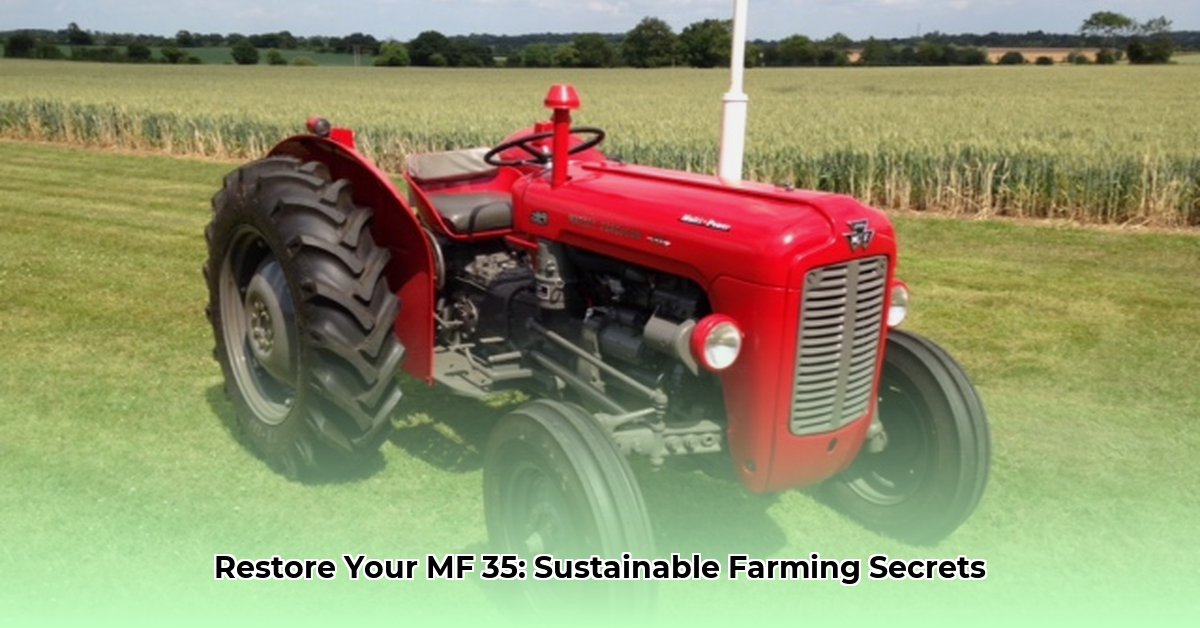
This guide helps you determine if a vintage Massey Ferguson MF 35 tractor can be a valuable asset in your sustainable farming operation. We'll explore its suitability, potential upgrades for improved efficiency and environmental friendliness, and the ongoing maintenance required for long-term use. For more MF35 deals, check out this resource.
Assessing Your Massey Ferguson MF 35: Is It the Right Fit?
Before purchasing a used MF 35, thoroughly assess its condition and suitability for your farm. A pre-purchase inspection is crucial. Look for significant mechanical issues and evaluate the availability of replacement parts—a critical factor in long-term reliability. Consider the total cost of ownership: purchase price, potential repairs, and ongoing fuel expenses. How do these compare to the cost of a newer, fuel-efficient tractor? Will this classic tractor's lower initial investment be offset by higher operating costs?
Crucially, consider the horsepower limitations of the MF 35. Will it handle your specific farming tasks? For smaller-scale operations, it might be ideal, but larger-scale farming may require a more powerful machine. This honest assessment is essential before proceeding.
Revamping Your MF 35: Sustainable Upgrade Options
If the MF 35 seems suitable, consider these eco-friendly upgrades:
Biodiesel Conversion
- Pros: Reduces reliance on fossil fuels, potentially lower fuel costs, smaller carbon footprint.
- Cons: Requires a conversion kit (often expensive), may require engine modifications, biodiesel availability varies regionally.
- Considerations: Research compatible kits and biofuels; ensure modifications don’t affect warranties or safety standards.
Improved Fuel Efficiency
- Pros: Lower fuel consumption, reduced operating costs, lessened environmental impact.
- Cons: Might require expert engine tuning, the impact varies by the specific modifications.
- Considerations: Implement regular engine tune-ups; consider using fuel-saving additives; maintain proper tire inflation (underinflation increases fuel use).
Precision Agriculture Integration
- Pros: Optimizes resource use (fertilizer, water), improves efficiency, minimizes waste, potentially higher yields.
- Cons: Requires specialized equipment (GPS, sensors, data logging systems); potentially complex installation and high costs.
- Considerations: Research compatible GPS and data management systems. Determine if your tractor's hydraulics or electronics are compatible with modern integrations.
The best upgrade path depends on your budget, technical expertise, and farm needs. A phased approach—starting with smaller, more affordable upgrades—is often practical.
Sustainable Maintenance & Parts Sourcing
Sustainable maintenance extends the tractor’s lifespan and minimizes its environmental footprint.
Smart Parts Sourcing: Prioritize used, refurbished, or recycled parts whenever possible. This reduces waste and minimizes costs.
Preventative Maintenance: Regular oil changes, filter replacements, and other key maintenance tasks are critical. This prevents larger, more costly repair down the line.
Responsible Disposal: Dispose of used oils, filters, and other waste materials according to local environmental regulations.
Regular maintenance not only keeps your MF 35 running efficiently but also minimizes its environmental impact. Have you considered the long-term savings of preventative maintenance?
Navigating Regulations: Staying Compliant
Before modifying your MF 35, research and adhere to all local regulations concerning emissions and safety standards. Contact your local agricultural authorities to ensure complete compliance. Ignoring these regulations can result in significant penalties.
Real-World Examples: Farmer Success Stories
Numerous farmers have successfully adapted MF 35 tractors for sustainable farming. These real-world examples demonstrate the feasibility and potential of this approach. (Further details on successful case studies would enhance this section).
Is the MF 35 Right for Your Sustainable Farm?
The decision to restore and retrofit an MF 35 is farm-specific. While not a universal solution, it can be an excellent choice for smaller farms or those with specific needs. Carefully weigh the pros and cons, considering your budget, technical skills, and farming practices. This guide aims to inform your decision, empowering you to choose what’s best for your sustainable farming goals.